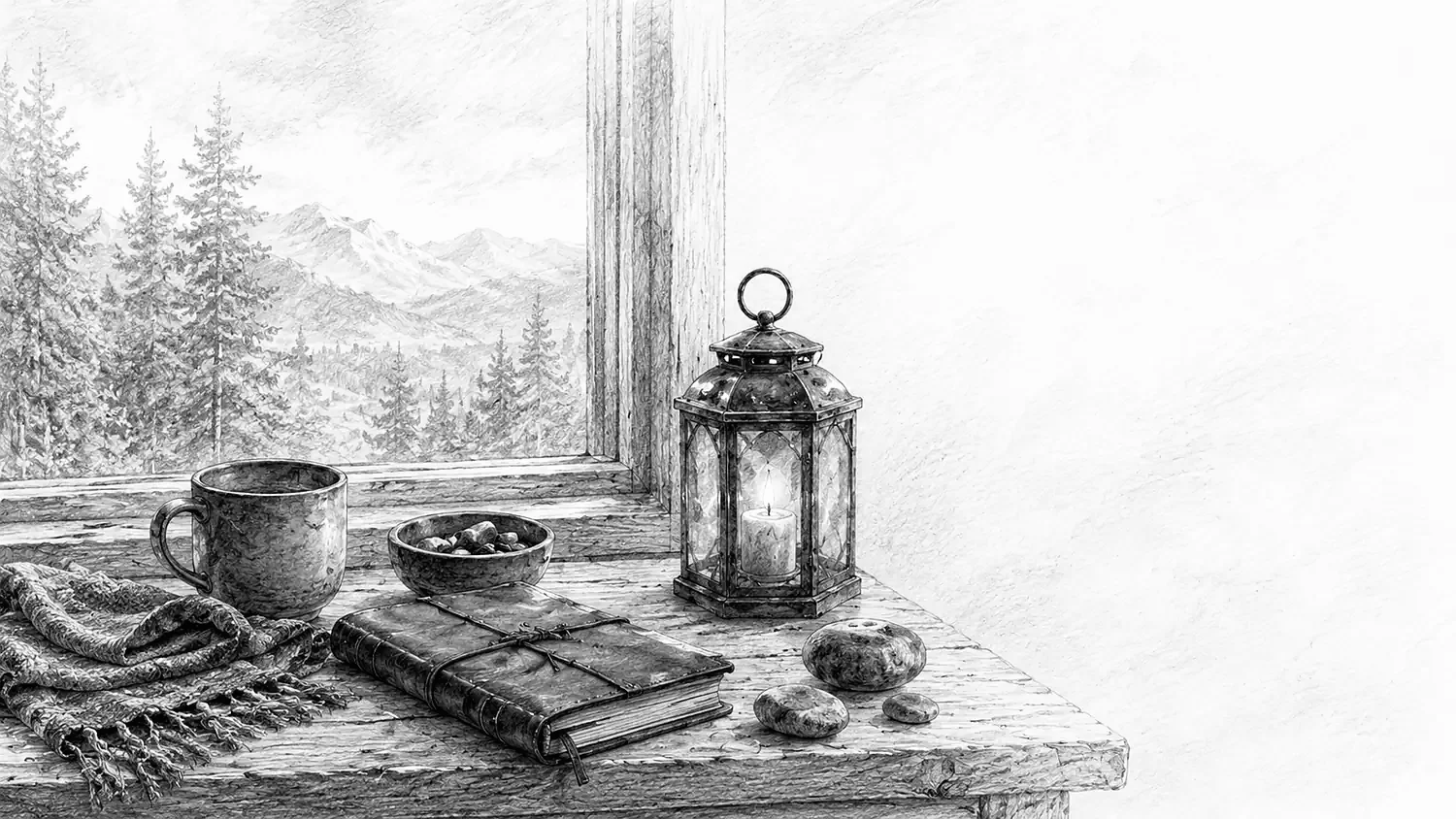
You might not be able to burn incense, light a flame, speak out loud, display symbols, or explain yourself to everyone around you. That does not make the practice fake. It means you start where you are, because that is where every real practice starts.
The whole site rests on three promises: read the old poems seriously, practice in the place you actually live, and do not let spirituality turn into shopping, fear, or internet performance.
What this site is
A plainspoken guide to modern Norse Pagan and Heathen practice. The Poetic Edda gives us stories, warnings, names, strange beauty, and old pressure. Your actual life gives you the place of practice. Between those two, a real practice can exist in an apartment, barracks, desert town, hotel room, or one clean corner of a desk.
The goal is not to pretend we can rebuild the past perfectly. We cannot. Modern Heathenry is reconstructed, living, and still being shaped. So the work is to be honest about sources, humble about gaps, and useful on an ordinary Tuesday.
What this site is not
- Not a claim to be the one correct way to practice.
- Not a replacement for scholarship, community, or your own careful reading.
- Not a folkish, "closed," or hate-friendly space.
- Not permission to carry offerings onto public land and leave trash behind.
- Not a place where every mythic action is treated as a moral instruction.
A seven-day beginning
One small act a day for a week. No shopping. The hearth becomes real through repetition, not through equipment.
- Day one — Read. Read one short passage of Hávamál. Write down a single line about speech, guests, travel, friendship, or caution that lands for you.
- Day two — Clear. Clean one small surface. That is your temporary hearth: a windowsill, a shelf, a corner of a desk.
- Day three — Offer. Set out a cup of clean water. Speak one sentence of gratitude. Later, pour it out respectfully — a plant, the soil, the sink.
- Day four — Sit with a story. Read a summary of one mythic poem. Ask what human problem the story is circling: fear, pride, grief, exile, hunger.
- Day five — Tend. Do one act of household order — dishes, trash, laundry, sweeping, making the bed — and treat it as hearth-tending, not a chore.
- Day six — Step out. Go outside for three minutes. Name the actual land around you: wind, heat, birds, stone, traffic, trees, sky, shadow.
- Day seven — Vow. Write a vow small enough to keep for one week. Then keep it. A kept small vow outweighs a grand one abandoned.
Your first reading path
If you want a doorway into the Poetic Edda itself rather than a daily rite, begin with Hávamál — the "Sayings of the High One." It reads like a field manual for conduct: hospitality, caution, friendship, moderation, and wise speech. It is the most immediately useful poem for someone building a portable practice. From there, the Edda Practice page gives you a repeatable method for turning any stanza into an action.
First rule: do not overbuild
A cup, a clean place, a few lines from the poems, and one honest act are enough to begin. Do not try to buy your way into a practice. The altar is not the point. The attention is. Everything else can come later, or never.
When you're ready for more
Once the daily habit is real, three reference pages open up the wider practice: Core Practices explains the two central rites (blót and sumbel) and who Heathens honor; The Heathen Year maps the festivals and days of importance; and Rites of Passage covers the milestones of a life. Take them in any order, whenever you want them.
Still have questions? The frequently asked questions page answers the most common ones plainly — beliefs, the afterlife, the gods, and how to begin.