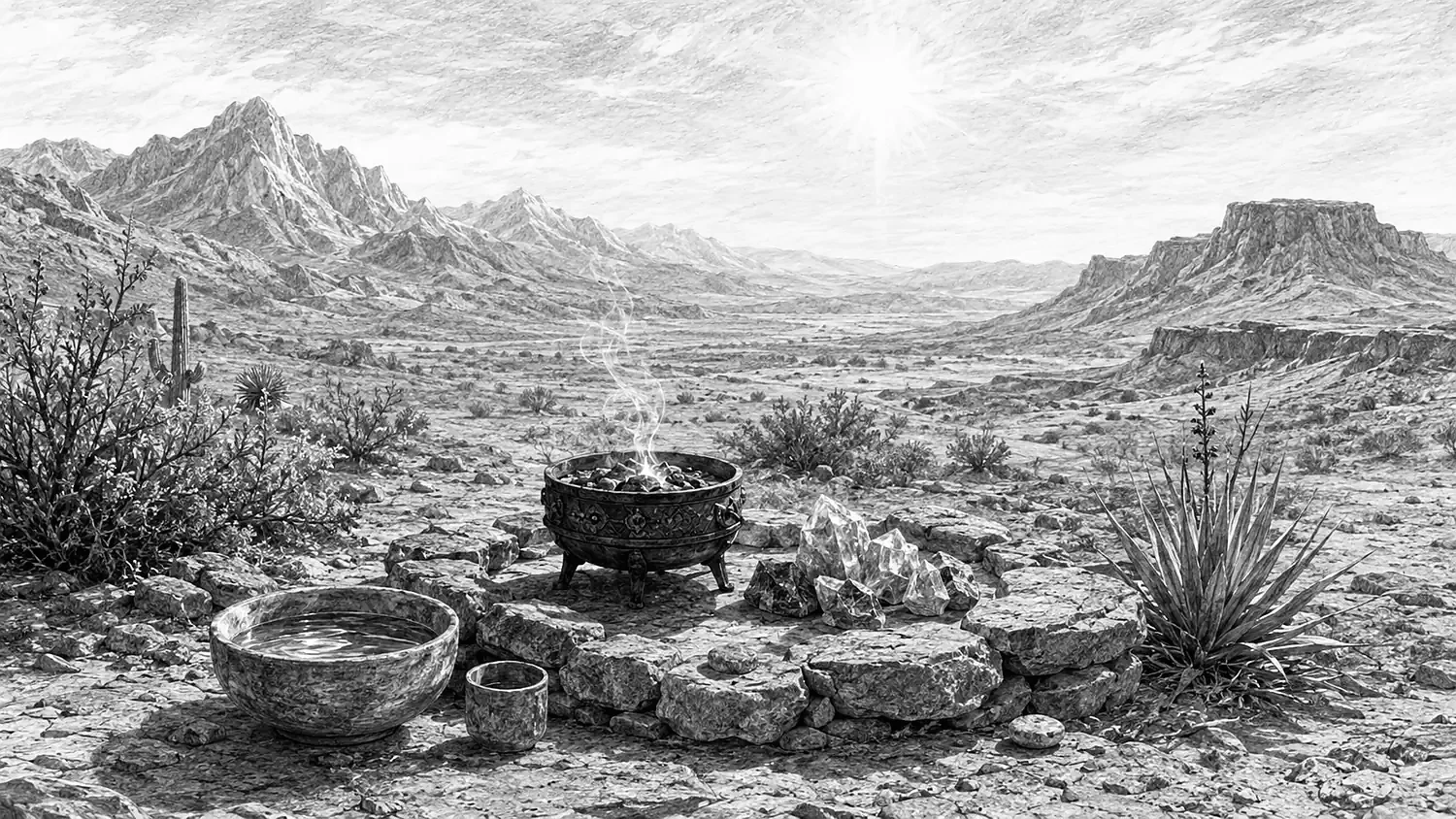
Offerings are one of the easiest ways to begin. They are also one of the easiest places to overbuild. You do not need a horn, imported mead, expensive tools, or a cinematic outdoor scene. A clean cup of water, spoken with attention and handled responsibly, is enough.
What counts as an offering?
An offering is a gift given with intention. In modern Heathen practice, common gifts include water, coffee, tea, bread, oats, fruit, flowers, incense where allowed, candlelight where safe, a cleaned space, a written promise, or useful work done in honor of a god, honored dead, or local place.
- Water
- The most portable offering. Safe for apartments, deserts, travel, sobriety, and public practice. In dry places, offer only a small amount and do not waste it performatively.
- Food
- Bread, grain, fruit, or a portion of a meal can work well at home. Outside, be careful: food can attract pests, harm wildlife, or violate park rules.
- Light
- A candle, lamp, or electric candle can stand for fire when flame is not safe. In apartments, dorms, barracks, hotels, and dry landscapes, no-flame practice is often the better practice.
- Work
- Picking up trash, cleaning your home, tending a plant, helping kin, keeping an oath, or repairing something broken can be an offering. This is often the most grounded gift of all.
Where to put it
- At home: place the offering on a clean shelf, windowsill, small cloth, plate, or bowl. Remove it before it spoils.
- Outside: use water, flowers, or a brief spoken offering unless you are certain food is safe and permitted.
- In a city: choose privacy and respect. Do not block walkways, leave objects, mark public property, or make strangers part of your rite.
- In the desert: avoid fire when conditions are dry. Offer shade, water used wisely, stone, cleanup, or a vow of stewardship.
- On the road: keep it small. A cup of water, a quiet word, a journal line, or a coin later given to a good cause is enough.
How to dispose of offerings
Disposal is part of the rite. Do it cleanly and without superstition panic. The point is respect.
- Water, tea, or coffee: pour into soil, a plant, or the sink with thanks.
- Bread, oats, fruit, or food: compost or dispose of it before rot, pests, or mold. Do not leave food outdoors unless you know it is safe and allowed.
- Flowers or herbs: compost, dry, or dispose responsibly. Avoid invasive plants and anything toxic to local animals.
- Candles: extinguish fully. Never bury wax or leave glass, tins, or matches outside.
- Written prayers: keep them in a journal, shred them, recycle them, or burn only where legal and safe.
A simple offering rite
- Set a cup or bowl on a clean surface.
- Say who the gift is for: a god, honored dead, house-wight, land-wight, or the powers that keep you.
- Name the gift plainly: “I give water,” “I give this cleaned space,” or “I give this work.”
- Speak one sentence of thanks or intention.
- Leave the gift for a short time, then dispose of it respectfully.
What not to do
- Do not leave trash, glass, metal, wax, plastic, or food waste outside.
- Do not light fires where fire is unsafe, illegal, or likely to spread.
- Do not pour alcohol in public spaces where it violates rules or creates problems for others.
- Do not force anyone to drink, toast, kneel, pray, or explain themselves.
- Do not treat “bigger” as “more spiritual.” A small kept practice is better than a dramatic one you cannot sustain.
Make it repeatable
The gifting cycle is built by repetition. Pick one offering you can make weekly without stress. Water on a windowsill. Coffee before work. A cleaned kitchen. A short honored dead toast. A quiet promise kept. The portable hearth grows by being tended.